

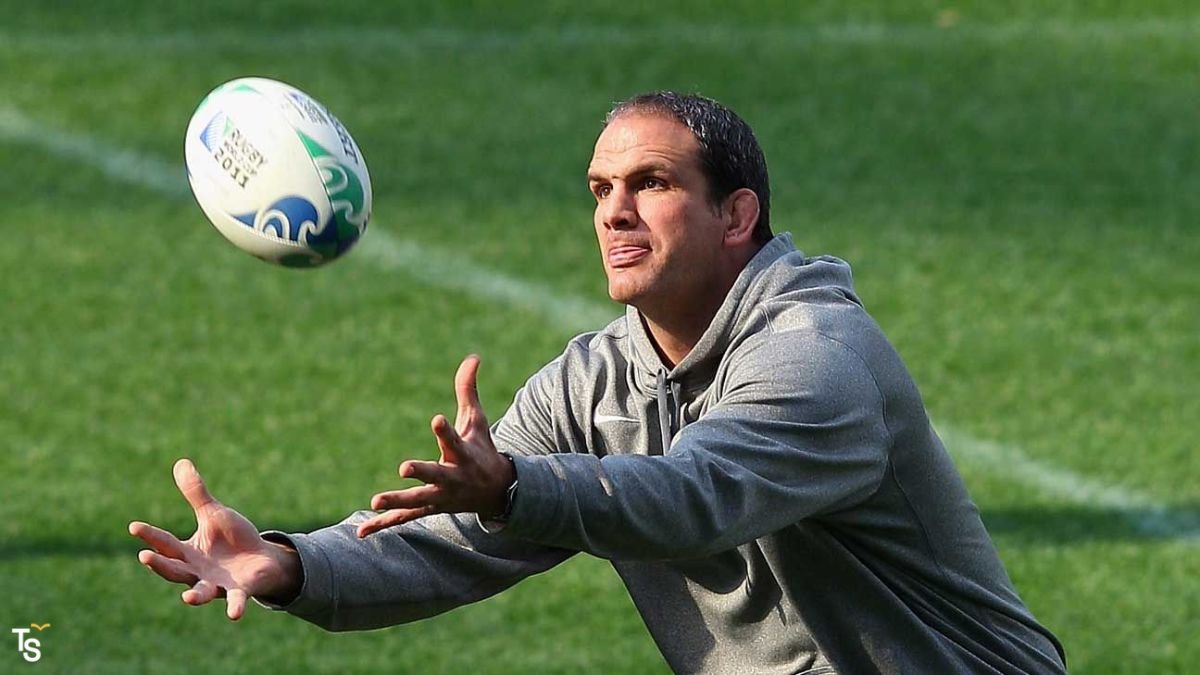
Martin Johnson is one of the most celebrated figures in English rugby union. Best known for captaining England to victory at the 2003 Rugby World Cup, he built an outstanding career with Leicester Tigers, England and the British & Irish Lions. His achievements also include two Lions captaincies and a successful period as England team manager.
Born on 9 March 1970, Johnson played as a second-row forward and earned 84 England caps between 1993 and 2003. Standing approximately 2 metres (6ft 7in) tall, he became known for his physical presence, competitive attitude and leadership. Since retiring from playing, he has remained involved in rugby discussions, including offering his views on England’s current captain, Maro Itoje.
Early Life and Rugby Beginnings
Martin Osborne Johnson was born on 9 March 1970 in Solihull, England. He attended Robert Smyth School in Market Harborough, where his sporting development began.
His rugby journey took an unusual direction when he moved to New Zealand as a teenager. He played for King Country and gained experience in a country where rugby holds a central place in sporting culture. During this period, he also represented New Zealand at under-21 level.
Johnson later returned to England and joined Leicester Tigers in 1989. His time in New Zealand helped shape his approach to the game, while Leicester provided the platform for his rise into professional rugby.
Martin Johnson’s Rugby Career
Johnson became one of the most influential second-row forwards of his generation. His combination of strength, discipline and leadership made him an important figure at club and international level.
Leicester Tigers
Johnson spent most of his playing career with Leicester Tigers, making his senior debut in 1989. He eventually became club captain and helped establish Leicester as one of Europe’s leading rugby sides.
During his captaincy, Leicester won four consecutive English league titles between 1999 and 2002. The club also secured back-to-back European Cup victories in 2001 and 2002.
These achievements established Johnson as a successful club leader long before England’s World Cup triumph.
England and the British & Irish Lions
Johnson made his England debut in 1993 and went on to earn 84 international caps. He became England captain in 1999 and led the national side through some of its most successful years.
His Lions career was equally impressive. He toured in 1993, 1997 and 2001, captaining the team on the final two tours.
The 1997 tour of South Africa was particularly significant. Johnson guided the Lions to a historic Test series victory against the Springboks, strengthening his reputation as an exceptional international leader.
He remains the first player to captain the British & Irish Lions on two separate tours.
Martin Johnson and England’s 2003 Rugby World Cup Victory
The defining moment of Martin Johnson’s career came on 22 November 2003, when he captained England to their first-ever Rugby World Cup title.
England faced Australia in the final at Sydney’s Stadium Australia. The match remained closely contested, with the teams level at 17–17 after normal time.
Jonny Wilkinson settled the contest with a drop goal in extra time, giving England a memorable 20–17 victory.
Johnson lifted the Webb Ellis Cup as captain, completing a remarkable period in English rugby. Earlier that year, he had also led England to the Six Nations Grand Slam.
His contribution went beyond the trophy itself. Johnson provided direction and composure to a team filled with outstanding players, including Wilkinson, Lawrence Dallaglio and Jason Robinson.
The 2003 victory remains one of the biggest achievements in English sporting history and the defining chapter of Johnson’s playing career.
Martin Johnson’s Height and Physical Presence
Martin Johnson stands approximately 2 metres tall, equivalent to around 6ft 7in. His playing weight was approximately 118kg.
His size suited the lock position, where players contribute to line-outs, scrums and physical contests around the field.
However, his influence came from more than his physical dimensions. His understanding of the game, work rate and ability to organise teammates helped make him an effective captain.
Who Is Martin Johnson’s Wife?
Martin Johnson is married to Kay, whom he met while playing rugby in New Zealand.
In interviews, Johnson has spoken about his wife’s family connections in New Zealand and explained how retirement allowed them to travel there for Christmas.
The couple have two children, Molly and Henry. Their family has generally stayed away from the spotlight, although Johnson occasionally discusses family life in interviews.
His son Henry has also developed an interest in rugby and has been involved in England’s youth rugby setup.
Martin Johnson as England Team Manager
After retiring from professional rugby in 2005, Johnson eventually returned to the international game in a management role.
The Rugby Football Union appointed him England team manager in April 2008, with his position beginning that July. The appointment gave him responsibility for rebuilding the national setup after England’s disappointing results following the 2007 World Cup.
His management career included some notable achievements. England won the 2011 Six Nations Championship under his leadership, ending an eight-year wait for the title.
However, the 2011 Rugby World Cup proved difficult. England reached the quarter-finals but lost 19–12 to France.
Johnson stepped down in November 2011 following the team’s disappointing tournament campaign.
What Has Martin Johnson Said About Maro Itoje?
Martin Johnson has continued to share his opinions on England rugby, particularly when discussing the expectations placed on the team’s leaders.
He has commented on England captain Maro Itoje and the importance of maintaining competition within the squad. His message has centred on the idea that no player should consider their position guaranteed, regardless of experience or reputation.
Johnson has also discussed the importance of managing experienced players ahead of the 2027 Rugby World Cup. He believes England’s management should consider giving certain players a summer break following demanding international campaigns.
These comments reflect the leadership principles Johnson developed during his own international career: competition, preparation and putting the team’s interests first.
What Is Martin Johnson Doing Now?
Martin Johnson remains connected to rugby through public appearances, interviews and involvement in sporting initiatives.
He has also supported charitable causes, including work that helps people affected by spinal injuries.
Although he no longer holds an official England coaching position, his opinions on international rugby continue to attract attention. His experience as a former captain and team manager gives him a valuable perspective on the demands of elite competition.
Martin Johnson’s Legacy in English Rugby
Martin Johnson’s legacy rests on achievements at club, international and leadership level.
His record includes:
- 84 England caps: Represented his country between 1993 and 2003.
- 2003 Rugby World Cup: Captained England to its first tournament victory.
- Two Lions captaincies: Led the British & Irish Lions on their 1997 and 2001 tours.
- Leicester Tigers success: Captained the club to four consecutive league titles and two European Cups.
- 2011 Six Nations: Guided England to the championship as team manager.
He was appointed a Member of the Order of the British Empire (MBE) in 1997 and received a CBE in 2004.
World Rugby inducted him into its Hall of Fame in 2011, recognising his contribution to the international game.
His achievements explain why he remains an important reference point when discussing England’s greatest rugby leaders.
Conclusion
Martin Johnson built an outstanding rugby career through his performances for Leicester Tigers, England and the British & Irish Lions. Captaining England to the 2003 Rugby World Cup remains his greatest achievement, while his success as a Lions captain further established his reputation.
Away from playing, his time as England team manager added another chapter to his sporting career. Today, his views on players such as Maro Itoje show that he remains interested in the direction of English rugby.
His combination of achievements, leadership and influence has secured his place among the most respected figures in the sport.
